
AI in Digital Marketing in 2026
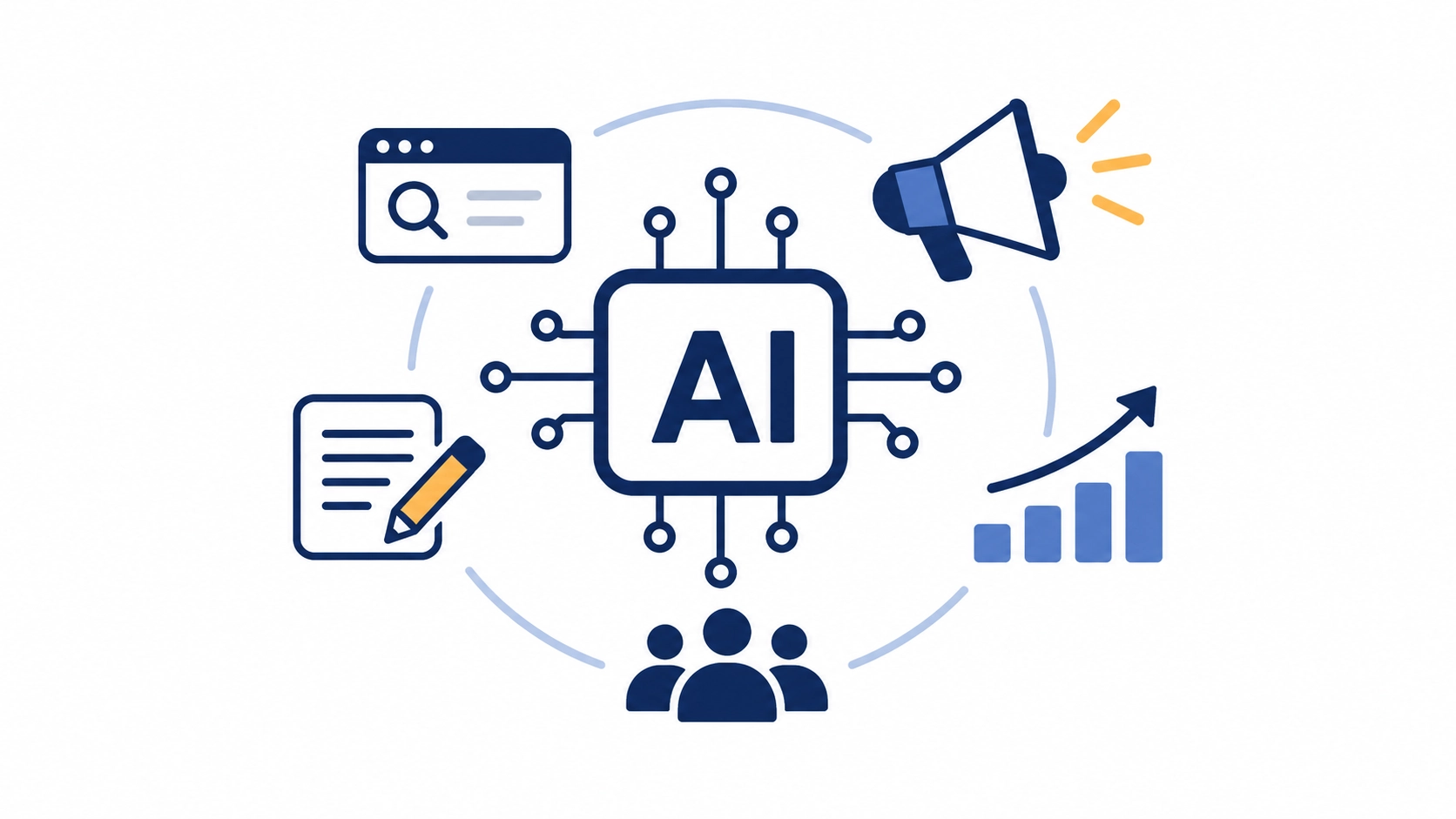
Artificial intelligence is changing how businesses plan marketing activities, communicate with customers, and manage their online presence. Tasks that once required hours of manual work can now be completed faster with AI-powered tools.
For small businesses and startups, AI creates opportunities to improve marketing activities without building a large team. From content creation to advertising and customer communication, artificial intelligence is becoming a useful part of digital marketing.
However, using AI does not automatically produce better results. Businesses need to understand how these tools work, where they can help, and when human involvement is necessary.
What Is AI in Digital Marketing?
AI in digital marketing refers to using artificial intelligence technologies to support activities such as content creation, SEO, social media management, advertising, and customer communication.
These tools can analyse information, identify patterns, generate content, and provide suggestions based on the instructions they receive.
For example, a business owner can use an AI tool to generate social media ideas, prepare a blog outline, or understand common customer questions. This helps marketers save time and focus more on planning and decision making.
How Businesses Can Use AI in Digital Marketing in 2026
1. AI for Content Creation
Creating useful content regularly can be challenging for businesses. AI tools can help generate ideas, prepare initial drafts, and Organise content.
Businesses can use AI for:
Generating blog and social media ideas.
Preparing captions and video scripts.
Creating content calendar suggestions.
Writing email drafts.
Organising marketing content.
For example, a restaurant can use AI to prepare Instagram post ideas about its menu, special offers, and customer experiences.
However, reviewing and editing AI-generated content is essential. Adding original ideas and a natural brand voice makes content more relevant to readers.
2. AI in Search Engine Optimization (SEO)
AI can support SEO activities by helping marketers research keywords, understand search intent, Analyse content, and identify improvement opportunities.
Common applications include keyword grouping, content planning, title suggestions, and identifying content gaps.
AI can also help marketers prepare content that answers specific user questions, supporting Answer Engine Optimization (AEO).
However, AI-generated content does not guarantee better Google rankings. Google focuses on helpful, reliable, original content that provides value to users.
3. AI for Social Media Marketing
Managing social media accounts requires regular planning, content creation, and audience interaction.
AI tools can help businesses generate post ideas, prepare captions, develop content calendars, and analyse engagement patterns.
For example, a clothing business can use AI to plan Instagram content for new collections and seasonal offers.
Businesses should still review their content to ensure it reflects their products, audience, and brand personality.
4. AI in Digital Advertising
Advertising platforms such as Google Ads and Meta Ads use AI-powered features to support campaign creation, targeting, and performance Optimisation.
These features can help advertisers test creative combinations, identify opportunities, and improve campaign performance.
However, automation cannot replace a proper advertising strategy. Businesses still need clear objectives, suitable budgets, relevant audiences, and regular performance reviews.
5. AI for Customer Communication
AI-powered chatbots can help businesses respond to common questions, share basic information, and guide website visitors towards relevant services.
For example, a small business can use a chatbot to answer questions about services, working hours, and contact details.
AI can also support email communication and customer enquiry management. For complicated requests and complaints, human support should remain available.
6. AI for Marketing Analytics
Marketing analytics helps businesses understand how their digital marketing activities perform.
AI can assist with analysing website traffic, customer engagement, advertising results, and conversion trends.
For example, if visitors view a service page but do not submit enquiries, a business can review its content, contact options, and website experience.
AI can help identify possible issues, but marketers must interpret the information before making decisions.
Popular AI Marketing Tools in 2026
Businesses can explore different AI tools depending on their marketing requirements.
| ChatGPT | Content ideas and writing assistance |
| Google Gemini | Research and content planning |
| Canva Magic Studio | Graphic design assistance |
| Grammarly | Grammar and writing improvements |
| Semrush | SEO research and content Optimisation |
| CapCut | Video editing and AI features |
Benefits of Using AI in Digital Marketing
When used correctly, AI offers several benefits:
Time savings: Helps complete repetitive marketing tasks faster.
Improved productivity: Supports content planning and daily activities.
Better planning: Helps Organise research and marketing ideas.
Content support: Assists with captions, scripts, and blog outlines.
Customer support: Helps answer routine questions through Automation. These benefits depend on the quality of the tools and how carefully their outputs are reviewed.
How Small Businesses Can Start Using AI in 2026
Small businesses do not need expensive software to begin using AI. A simple approach can make the process easier.
Identify repetitive tasks that consume time.
Choose suitable AI tools for specific requirements.
Provide clear instructions about your business and target audience.
Review generated content before publishing.
Measure the results and identify improvements.
Continue using AI where it provides genuine value.
Frequently Asked Questions About AI in Digital Marketing
1. What is the role of AI in digital marketing?
AI helps businesses create content, Analyse data, improve advertising, research keywords, and communicate with customers more efficiently.
2. Which AI tools are best for digital marketing?
Popular tools include ChatGPT, Google Gemini, Canva, Grammarly, Semrush, and CapCut. The right choice depends on the task.
3. Can small businesses use AI for digital marketing?
Yes. Small businesses can use AI for content planning, social media management, customer communication, and marketing analysis.
4. Will AI replace digital marketers?
AI can automate repetitive tasks, but strategy, creativity, communication, and business understanding still require human involvement.
5. Does AI-generated content affect SEO rankings?
AI-generated content does not automatically receive lower rankings. Google Prioritises helpful, original, reliable content rather than content created simply to manipulate search rankings.
Conclusion: Using AI with the Right Digital Marketing Strategy
AI is becoming a useful part of digital marketing in 2026. It helps businesses save time, organise marketing activities, understand customers, and improve their daily workflow.
However, successful marketing is not simply about using more AI tools. Businesses need a clear strategy, relevant content, accurate information, and a proper understanding of their audience.
Combining AI capabilities with human creativity and decision-making can help businesses build a more effective digital marketing process.
If you want to improve your business’s online presence, explore the digital marketing services offered by Amal Krishna, Freelance Digital Marketer in Palakkad. Visit amalldigi.com to learn more or get in touch.